The Sociology of Cats: Exploring Feline Social Structures
Cats have enchanted human society for thousands of years, earning reputations as aloof, independent, and mysterious creatures. Yet, beneath the surface, felines display fascinating social dynamics—both in the wild and at home. The sociology of cats delves into how cats organize themselves, communicate, and form relationships. Understanding these social structures not only satisfies our curiosity, but also helps us provide better care for our feline companions. In this article, we explore the complex world of feline society, from wild colonies to the subtleties of domestic cat interactions.
Understanding Feline Sociality: Beyond the "Solitary Hunter" Myth
Historically, cats have been labeled as solitary hunters, unlike the famously social dog. However, research over the past few decades has painted a more nuanced picture. While cats are indeed capable of hunting and surviving alone, many species—especially domestic cats (Felis catus)—can thrive in social groups under the right circumstances.
A 2007 study published in the journal "Behavioral Processes" found that feral cats often form stable colonies with intricate social hierarchies, particularly when food is abundant. In these colonies, females frequently cooperate in kitten-rearing, sharing nests and nursing duties. Male cats, meanwhile, may form loose alliances or compete for mating opportunities. This social flexibility is a key factor in the domestic cat's global success, adapting their behaviors to fit rural farms, urban alleyways, and even multi-cat households.
.png)
It's important to note that not all cats display the same degree of sociability. Feral colonies are common near reliable food sources, such as garbage dumps or fishing villages, while cats in areas with scarce resources tend to be more solitary. This variability highlights the adaptability of feline social behavior.
The Social Structure of Feral Cat Colonies
Feral cat colonies provide a fascinating window into natural feline social organization. Unlike the rigid hierarchies seen in wolf packs or lion prides, feral cat groups are more fluid and matriarchal in nature.
Key features of feral cat colonies include:
- $1 Colonies are typically organized around a core group of related females and their offspring. Female cats (queens) form the bedrock of the colony, cooperating in activities like nursing, grooming, and defending territory. - $1 Adult males are more transient. Some establish themselves on the periphery of the colony, forming loose networks called "coalitions," while others roam between multiple groups. - $1 Colonies maintain overlapping home ranges, with boundaries defined more by resource availability than rigid defense. - $1 Cats use scent marking, vocalizations, and body language to signal territory, status, and reproductive availability.A 2015 study in "Applied Animal Behaviour Science" estimated that a stable feral cat colony typically consists of 3-15 individuals, but larger colonies of up to 30-40 cats have been documented in urban environments with plentiful resources.
Comparing Wild and Domestic Cat Social Systems
To understand the full spectrum of feline sociality, it's helpful to compare the social structures of various wild and domestic cats. While lions (Panthera leo) are unique among wild cats for their highly social prides, other felines display a range of social behaviors.
Below is a comparative overview of social organization in different cat species:
| Species | Typical Social Structure | Group Size | Key Social Behaviors |
|---|---|---|---|
| Lion (Panthera leo) | Highly social, organized into prides | 10-40 | Cooperative hunting, communal cub care, territorial defense |
| Domestic Cat (Felis catus) | Flexible; solitary or colony-based | 1-40 (in colonies) | Shared kitten rearing, scent marking, social grooming |
| Leopard (Panthera pardus) | Solitary | 1 (except during mating or with cubs) | Strong territoriality, solitary hunting |
| Cheetah (Acinonyx jubatus) | Males may form coalitions; females solitary | 1-5 | Male cooperation, female independence |
| Bobcat (Lynx rufus) | Solitary | 1 | Territorial scent marking, avoidance of conspecifics |
This table highlights the remarkable adaptability of the domestic cat, which can oscillate between solitary and social lifestyles depending on environmental factors.
Communication and Social Signals Among Cats
Effective communication is the backbone of any social system, and cats are no exception. While their cues may be subtler than those of dogs, feline communication is sophisticated and diverse.
- $1 Cats rely heavily on scent to convey information about territory, reproductive status, and identity. Facial rubbing (bunting) deposits pheromones that mark safe or familiar areas. - $1 From the familiar meow (used mainly with humans) to trills, growls, and yowls, cats employ a variety of sounds. Feral cats in colonies often use quiet chirps and purrs to communicate with kittens and close companions. - $1 Tail position, ear angle, and pupil dilation can signal everything from contentment to aggression. Social grooming (allogrooming) and sleeping in close contact are signs of trust and affiliation.Research has shown that cats develop "social dialects" within colonies, with unique combinations of scent, sound, and gesture that reinforce group bonds. A 2019 study observed that cats recognized individual colony members by scent, helping to reduce conflict and maintain social harmony.
Domestic Cat Social Structures: Households and Multi-Cat Homes
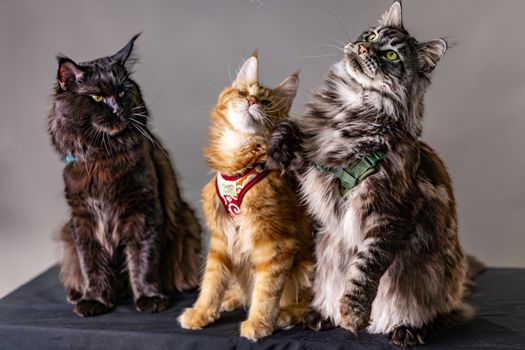
In the home, domestic cats adapt their social strategies to fit human-centric environments. While some cats prefer solitude, many thrive in multi-cat households, forming complex relationships with both people and other pets.
Factors influencing social harmony in homes include:
- $1 According to the American Veterinary Medical Association, households with multiple food bowls, litter boxes, and resting spots report 30% fewer cat-on-cat conflicts. - $1 Introducing cats gradually, over 1-2 weeks, significantly increases the chance of peaceful cohabitation. - $1 Owners often serve as "social facilitators." Studies show that cats are more likely to display affectionate or tolerant behaviors in the presence of their favorite humans.Kittens raised together or adopted at a young age are more likely to form strong social bonds. However, even adult cats can learn to coexist peacefully with patience and proper management.
Societal Implications: How Understanding Cat Sociology Benefits Humans
Why does the sociology of cats matter? Beyond scientific curiosity, understanding feline social structures has practical implications for animal welfare, urban planning, and pet ownership.
- $1 Trap-Neuter-Return (TNR) programs rely on knowledge of colony dynamics to humanely control feral populations. The ASPCA reports that TNR efforts can reduce feral cat numbers by as much as 66% over 10 years, improving the health and stability of remaining colonies. - $1 Recognizing signs of feline stress or social discord helps owners and veterinarians address problems before they escalate. For example, inappropriate urination is often linked to social stress in multi-cat households. - $1 Shelters that house cats in group rooms or pair compatible individuals see higher adoption rates. A 2021 survey found that cats housed with "friends" were adopted 15% faster than those kept alone.In essence, a deeper understanding of feline sociology leads to happier, healthier cats and communities.
Final Reflections on Feline Social Structures
The world of cats is far more socially rich than once believed. From the matriarchal colonies of feral felines to the subtle alliances and rivalries in our living rooms, cats display a remarkable capacity for adaptation and cooperation. As research continues to uncover the intricacies of feline society, we gain not only scientific insight but also practical tools to enrich the lives of our beloved companions. By appreciating the sociology of cats, we deepen our bond with these enigmatic animals—and learn more about the nature of social life itself.