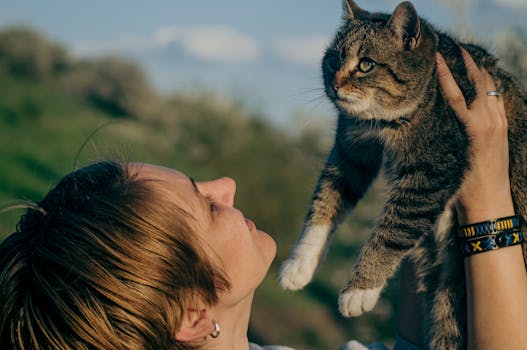
Exploring the Cognitive World of Cats: Insights for Better Relationships
Cats are often perceived as mysterious and independent creatures, prompting curiosity about their cognitive abilities. Understanding how cats think, learn, and interact with their environment can significantly enhance the human-feline relationship and improve their overall welfare. This article explores the fascinating cognitive world of cats, shedding light on their learning behaviors, communication skills, and social interactions.
Learning and Problem-Solving Abilities
.png)
Cats manifest unique cognitive abilities that align with their evolutionary history as solitary hunters. They are adept at learning through observation and personal experience, showing a preference for a trial-and-error approach over social learning from humans, which is more common in dogs. This method of learning is visible from kittenhood, as young cats explore and interact with their surroundings, and continues into adulthood with behaviors such as manipulating objects to access food or navigate their environment.
Spatial Awareness and Navigation
Cats display exceptional spatial awareness, which is critical not only for hunting but also for evading predators. They utilize their memories and visual landmarks to map their environment, remembering the locations of essential resources and safe spots. This keen sense of space helps them move stealthily and efficiently, whether they're in a familiar home setting or exploring new territories.
Communication: More Than Just Meows
Communication is a critical component of feline cognition. Cats use a sophisticated system involving vocalizations, body language, and scent markings to interact with each other and humans. For instance, cats communicate their emotions and intentions through various sounds like purrs, meows, and hisses, as well as through body language such as tail positioning and ear movements. Recognizing these signs can help cat owners understand and respond to their pets' needs more effectively.
Social Cognition: Independent yet Affectionate
Although cats are often seen as less socially dependent than dogs, they possess the ability to form strong bonds with humans and other animals on their terms. Studies have indicated that cats can recognize their owners' voices and even read human facial expressions to some extent, helping them to respond appropriately to the emotional states of their caregivers. This capability reflects a sophisticated level of social cognition that respects their independence while allowing for emotional connections.
Problem-Solving Skills
Cats frequently demonstrate remarkable problem-solving skills, particularly when motivated by factors like food or security. They are known to operate latches, open doors, and devise creative solutions to reach elevated or enclosed spaces. Understanding and encouraging this aspect of their intelligence can lead to a more engaged and contented cat, as it stimulates their natural instincts and provides mental challenges.
Addressing Misunderstood Behaviors
Sometimes, cat behaviors can be misunderstood or perceived as problematic, such as furniture scratching. Recognizing the cognitive and instinctual basis for such actions can lead to more effective management strategies. For example, scratching is a natural behavior that helps cats keep their claws sharp and mark their territory. By providing suitable alternatives like scratching posts and understanding the underlying needs, cat owners can discourage unwanted behaviors while respecting their natural instincts.
Conclusion: Enhancing Human-Cat Bonds
Understanding the cognitive world of cats opens up new avenues for improving the interactions and bonds between cats and their human companions. By acknowledging their learning preferences, communication strategies, and social needs, cat owners can create a more enriching and satisfying environment for their pets. This not only elevates the quality of life for cats but also deepens the mutual understanding and affection shared between cats and humans.