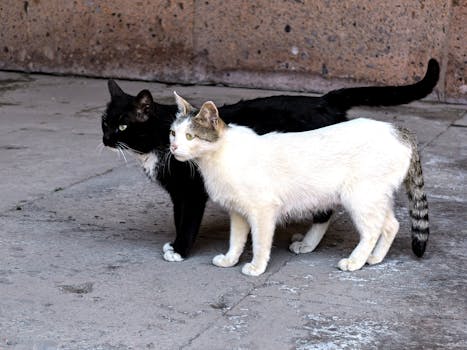
Cats, often perceived as independent and solitary animals, exhibit intricate social structures that can profoundly influence their behavior and welfare. By delving into the sociology of cats, particularly their colony dynamics, we can enhance our approaches to both caring for domestic cats and managing feral cat populations.
Understanding Cat Colonies
Cat colonies are primarily formed by groups of related females that band together to rear their young. These colonies are more than just gatherings; they are structured communities where resources like food and shelter are shared, and specific social behaviors are observed. The hierarchy within these colonies is usually led by a dominant female, who has priority access to resources. This matriarchal setup helps maintain order and ensures the survival of the group.
.png)
Male cats, while generally more solitary, interact with these colonies for breeding purposes. Unlike the females, males roam between multiple colonies and are not involved in raising the kittens.
Communication and Social Interaction
Cats utilize a range of communication techniques that include vocal sounds, body language, and scent marking. Each method serves specific purposes, from establishing territory to signaling mood and health status. Understanding these cues is crucial for interpreting cat behavior, particularly in multi-cat households or in settings where feral cats interact closely with humans.
Environmental Influence on Social Behavior
The environment plays a significant role in the structure of cat colonies. Urban areas, with their abundance of food sources, often support larger, more stable colonies. In contrast, cats in rural settings may live more solitary lives, requiring larger territories to secure enough resources. This environmental impact must be considered when developing strategies for cat welfare and population management, particularly in urban settings.
Practical Implications for Cat Welfare
Knowledge of cat social structures is not just academic—it has tangible implications for cat welfare. For instance, the trap-neuter-return (TNR) approach in managing feral cat populations considers the stability of cat colonies. By neutering and returning cats to their original environment, TNR programs help control the population while maintaining the colony's social structure, thereby minimizing stress and disruption.
For cat owners, understanding these dynamics can aid in better house integration and conflict resolution among pets. Introducing new cats to a home, for instance, should be managed sensitively to respect existing social hierarchies and territories, preventing stress and aggression.
Conclusion
The social life of cats is complex and impacts their health and behavior significantly. Whether it's managing a feral colony or introducing a new kitten into your home, a deep understanding of how cats interact and establish social structures is invaluable. This knowledge not only promotes better welfare practices but also deepens the human-cat bond—a crucial aspect of pet ownership and animal care. By appreciating and respecting these social nuances, we can ensure happier, healthier lives for both domestic and feral cats.