Cats have long captivated human imagination with their enigmatic personalities and graceful forms. While modern cat lovers may dote on their feline companions for comfort and companionship, the story of the cat’s relationship with humans stretches back thousands of years. Across ancient civilizations, cats played surprisingly diverse and influential roles—from protectors of precious grain to sacred symbols of divinity. This historical study explores how cats shaped, and were shaped by, the cultures of Egypt, Rome, Greece, and beyond, highlighting their enduring significance in the fabric of human society.
Cats in Ancient Egypt: Sacred Symbols and Spiritual Protectors
Perhaps no civilization is more closely associated with cats than ancient Egypt. As early as 4,000 years ago, Egyptians began to domesticate the African wildcat (Felis silvestris lybica), and by 1950 BCE, cats were common in Egyptian households. Their primary role was practical: cats were celebrated for their prowess in hunting mice, rats, and snakes, protecting vital grain stores and safeguarding food supplies.
Yet the Egyptian relationship with cats quickly grew into something far deeper. Cats became powerful spiritual symbols, embodying grace, fertility, and protection. The goddess Bastet—often depicted as a lioness or as a woman with the head of a domestic cat—was revered as the protector of the home and family. Killing a cat, even accidentally, was a crime punishable by death, as recorded by Greek historian Herodotus in the 5th century BCE.
.png)
Cats were not only honored in life but mourned in death; families shaved their eyebrows as a sign of grief when a beloved cat died. Archaeological discoveries have unearthed vast cat cemeteries, such as the one at Bubastis, where over 300,000 mummified cats have been found. According to a 2019 study, over 8 million animal mummies—many of them cats—were interred in ancient Egyptian necropolises.
Cats in Ancient Rome and Greece: Guardians and Good Omens
While Egypt’s reverence for cats was unmatched, both Greece and Rome also recognized the value of feline companions. In ancient Greece, cats were rare until the 5th century BCE, when Phoenician traders introduced them from Egypt. Greeks admired cats for their hunting skills and agility, though they often preferred weasels and ferrets for pest control.
Cats began to gain popularity in Rome by the 1st century CE, largely as a result of contact with Egypt. Romans valued cats as household guardians and symbols of liberty—the goddess Libertas was sometimes depicted with a cat at her feet. Cats’ reputation for independence and stealth made them admired figures, and they frequently appear in Roman mosaics and frescoes.
Unlike Egypt, cats in Greece and Rome were not generally worshiped as deities, but they were considered to bring good fortune. A healthy cat in the home was seen as a positive omen, while harming a cat was widely frowned upon. Evidence from archaeological sites in Pompeii and Herculaneum, such as cat bones found in domestic settings, attests to their presence and status.
Cats in Mesopotamia, Persia, and the Near East: Practical Companions
In Mesopotamia and Persia, cats were appreciated primarily for their practical utility. Grain storage was central to these early agrarian societies, and rodent infestations posed a constant threat. Cats proved invaluable in keeping these pests at bay, preserving both food supplies and economic stability.
Interestingly, while cats were not commonly depicted in Mesopotamian art or mythology, written records from the 8th century BCE refer to them in the context of trade and household management. In Persia, cats were admired for their cleanliness and hunting abilities. The Persian word for cat, "gorbe," became widespread, and by the Sassanid era (224–651 CE), cats were featured in Persian literature and poetry as loyal, clever animals.
Cats in Ancient China and India: Symbols of Luck and Mystery
Cats made their way to China by the Han Dynasty (206 BCE–220 CE), likely via trade routes from the Near East. In China, cats were prized for their ability to protect valuable silkworms from mice, and their presence in the home was associated with prosperity and good luck. The Chinese character for cat (猫) shares its pronunciation with the word for 80 years old, symbolizing longevity.
In ancient India, cats played a modest but intriguing role. The sacred text Manusmriti, written around 200 BCE, mentions fines for those who harm cats, indicating their protected status. In Hindu mythology, the goddess Shashthi, protector of children, is sometimes depicted riding a cat. Cats were also appreciated for their stealth and ability to control vermin in granaries and temples.
Comparing Cats’ Roles Across Ancient Civilizations
To better understand the diverse roles of cats in ancient societies, consider the following comparative overview:
| Civilization | Primary Role of Cats | Religious Importance | Legal Status | Archaeological Evidence |
|---|---|---|---|---|
| Egypt | Spiritual protector, pest control | High (deified, sacred) | Killing cats punishable by death | Mummified cats, cat statues, artwork |
| Greece | Pest control, companion | Moderate (associated with Artemis) | Protected but not sacred | Artworks, bones in domestic sites |
| Rome | Pest control, symbol of liberty | Low-Moderate (associated with Libertas) | Protected, harming cats frowned upon | Mosaics, frescoes, remains in ruins |
| Mesopotamia | Pest control | Low (practical value only) | Mentioned in trade/legal records | Scattered references, some remains |
| China | Pest control, luck, silk protection | Moderate (symbolic of luck) | Protected in some texts | Ancient texts, ceramics, art |
| India | Pest control, religious symbolism | Moderate (associated with Shashthi) | Protected by law | Religious texts, some artwork |
Cats and Trade: The Global Spread of Felis Catus
The spread of domestic cats across the ancient world was closely tied to trade and migration. Egyptian cats traveled with merchants and sailors, finding their way to Greece, Rome, and Asia Minor by the 1st millennium BCE. The Phoenicians, famed for their maritime prowess, are credited with introducing cats to Mediterranean Europe.
Cats were valued shipboard companions, keeping vermin in check on long journeys. By the 6th century CE, cats had reached northern Europe, and by the 10th century, they were established in Viking settlements. Genetic studies published in 2017 by the University of Leuven revealed that ancient cat DNA from Egyptian and Near Eastern populations can be traced as far as northern Europe, confirming the importance of trade in their dissemination.
This global spread had enduring consequences: cats adapted to diverse climates and cultures, taking on new symbolic and practical roles wherever they went. Their ability to thrive alongside humans—whether as revered deities or as humble mousers—ensured their survival and popularity across centuries.
The Enduring Legacy of Ancient Cats
The influence of ancient civilizations on the role of cats is still visible today. Modern cat breeds like the Egyptian Mau trace their lineage to ancient Egypt, while Persian cats have roots in the ancient Near East. The cultural perception of cats as symbols of mystery, independence, and good fortune persists in many societies.
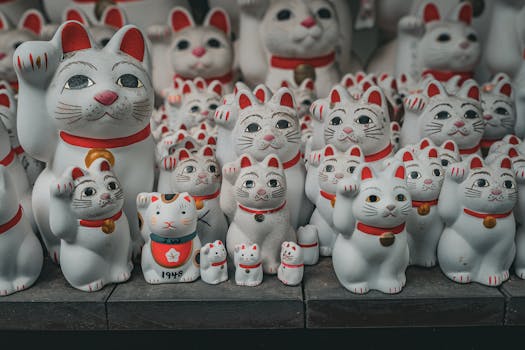
Even legal and religious ideas about cats have echoes in the present. Many cultures still view harming cats as taboo, and cats continue to be associated with luck and protection in folklore from Russia to Japan. The ancient view of cats as both practical and spiritual companions set the stage for the deep bond humans share with felines in the modern world.
Final Insights: The Cat’s Pawprint on Human History
The role of cats in ancient civilizations was far more than that of a mere pest controller. Across Egypt, Greece, Rome, Persia, China, and India, cats were woven into the spiritual, legal, and social fabric of daily life. They were protectors of food, guardians of homes, and sometimes even embodiments of deities. Their journey from wild hunters to beloved household members reflects the adaptability and enduring charm of Felis catus.
Today, as we marvel at the mysterious allure of our domestic cats, it is worth remembering their remarkable journey through the halls of ancient civilizations—where they served, inspired, and enchanted generations long before they curled up on our laps.