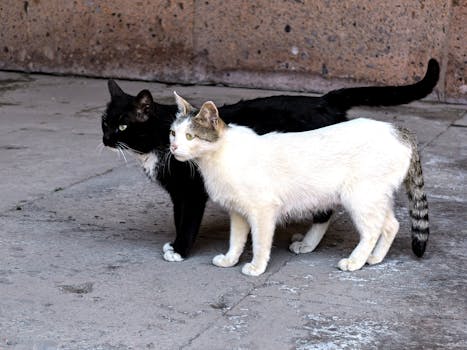
Cats, often perceived as independent and aloof, actually possess a rich and nuanced social life that is fascinating to uncover. By delving into their world of communication, bonding, and territorial behavior, we can better understand and appreciate these enigmatic creatures, enhancing our interactions and care for them.
Exploring Cat Social Structures
Cats' social structures are influenced by various factors, including their environment, the availability of resources, and their individual personalities. In the wild, cats can live solitarily or in groups, known as colonies, based on food availability and safety. Domestic cats adapt their social behavior based on their upbringing and the dynamics of their home environment.
.png)
In-Depth Look at Cat Social Behaviors
- Communication Techniques: Cats have developed a sophisticated system of communication that involves vocalizations, body language, and scent markings. Each vocalization has a specific meaning, from the comforting purr to the intimidating hiss. Their body language, including the position of their tails and ears, provides insight into their emotions and intentions. Scent marking serves as a way to claim territory and communicate status within a group.
- Formation of Social Bonds: Cats form attachments with other cats, animals, and humans. This bonding is crucial for their emotional health and can be seen in behaviors such as mutual grooming and sharing sleeping spaces. These bonds can significantly affect their stress levels and general well-being.
- Territorial Behaviors: Territoriality is a critical aspect of feline behavior, with cats actively managing their space through scent marking and sometimes through confrontations. Understanding these behaviors is key to managing multi-cat households and preventing conflicts.
Benefits and Challenges of Social Living
Social interactions among cats offer numerous benefits, including companionship, protection, and improved mental health. However, they can also lead to challenges such as conflicts over territory, the spread of diseases, and stress from hierarchical struggles.
Observational Insights from Multi-Cat Homes
Owners of multiple cats can observe a range of interactions that reflect the group dynamics and hierarchies at play. For example, the cat that sleeps in the highest spot often holds a dominant position within the group. Such observations can help owners make informed decisions about managing their pets' environment to foster harmony and reduce stress.
Concluding Thoughts and Care Recommendations
Understanding the complex social lives of cats enhances our ability to care for them sensitively and knowledgeably. For those looking to deepen their understanding, engaging with scientific literature and animal behavior studies can provide additional insights. Moreover, fostering an environment that respects each cat's need for space and social interaction can help prevent behavioral issues and promote a peaceful, engaging home life.
By appreciating the social intricacies of cats, owners and cat enthusiasts can develop stronger, more responsive relationships with these beloved animals, ensuring their happiness and well-being in multi-faceted environments.