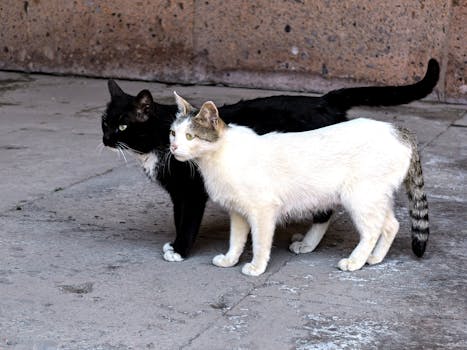
Exploring the social bonds among cats reveals a fascinating layer to their often misunderstood personas. Traditionally viewed as solitary hunters, cats indeed possess a nuanced social fabric that allows them to form enduring relationships with both their human owners and fellow felines. This deeper understanding can significantly enhance the way we care for and interact with our beloved pets.
Cats exhibit social behaviors that might be less overt than those of dogs but are equally significant. Domesticated cats, in particular, show a variety of social interactions that are influenced by their environment, upbringing, and individual personalities. For example, cats that have been raised together from kittenhood are more likely to exhibit close-knit behaviors such as mutual grooming, shared sleeping spaces, and playful interactions.
Mutual grooming, or allogrooming, serves multiple purposes; it is not only a practice of cleanliness but also one of affection and social hierarchy establishment. Cats that engage in this behavior typically enjoy a close relationship. Similarly, cats that sleep together demonstrate a trust and comfort level that speaks to a strong bond, rooted in the instinctual behavior of seeking warmth and protection through numbers.
.png)
Play, particularly among kittens, is crucial for social development. It is through playful interactions that cats learn vital survival skills such as hunting and self-defense. In adult cats, play continues to serve as an important function for exercising and strengthening social bonds. Cats that frequently engage in play are showing signs of trust and familiarity, which are fundamental aspects of their social interactions.
Communication among cats is intricate, involving vocalizations, body language, and scent marking. Each meow, purr, or hiss can convey different messages and emotions. Body language, such as the positioning of ears and tail, provides additional cues that facilitate feline interaction. Scent marking, achieved through rubbing or scratching, allows cats to establish territory and communicate their status and identity to other cats.
The role of the environment cannot be overstated in fostering healthy social interactions among cats. In households with multiple cats, it is crucial to ensure that each cat has access to its own resources, such as food dishes and litter boxes, to minimize competition and stress. Environmental enrichment, including toys, scratching posts, and climbing areas, can also contribute to a more harmonious and stimulating living space for cats.
By understanding and catering to the social needs of cats, owners can significantly enhance the well-being of their pets. Observing and supporting the interactions of cats not only helps in creating a more engaging and safe environment but also deepens the relational bond shared between cats and their human companions.
In essence, while cats may inherently be inclined towards solitary behavior due to their natural hunting instincts, they are fully capable of forming deep, meaningful relationships with other cats and humans. Recognizing and nurturing these relationships can lead to a more fulfilling and harmonious life for our feline friends.